


Euchre Classic Card Game
4.13.06K Reviews
App Specs
- Version
- 1.6.1
- Updated On
- License
- Free
- Downloads
- 500,000+
- Developer
- FIOGONIA LIMITED
- Categories
- Card
- Platform
- Android
Screenshots
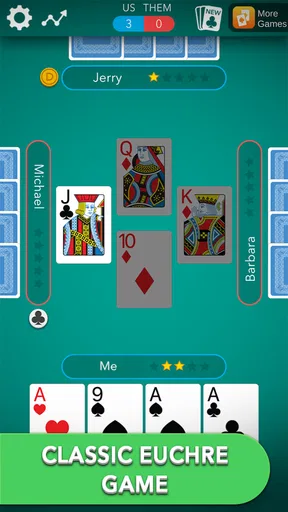
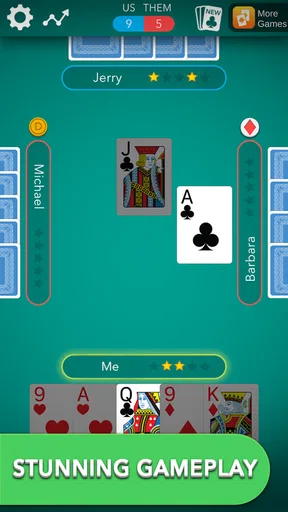
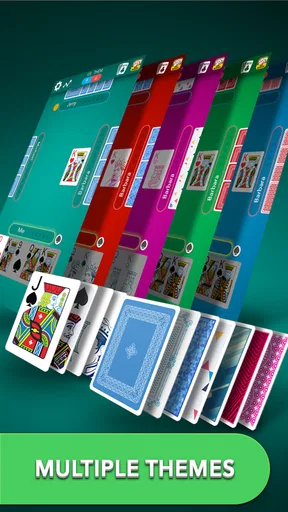
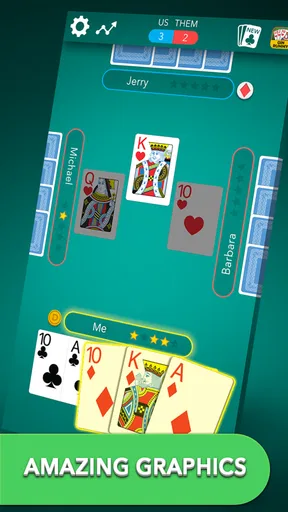

 Analysis by AppCompare
What makes Euchre Classic Card Game worth a closer look is its focus on one traditional trick-taking game rather than a large collection of unrelated card modes. I found that narrow focus useful: once I understood the rhythm of bidding, choosing trump, and managing the small hand, I could get into a match quickly without learning a new system every time I opened it. It is a free card game from FIOGONIA LIMITED, available for players rated Everyone, and it combines online and offline play in a way that suits both short solo sessions and more social games.
That combination is the real point of the app. Euchre is easy to start but has enough partnership strategy to reward attention, and the ability to play without an internet connection makes it more practical than a purely online alternative. I would not describe it as a flashy or content-heavy game. Instead, it is a focused digital table for people who already enjoy Euchre, want to learn the basics, or need a compact way to practise the decisions that matter.
Why the online and offline capability matters
The most important capability here is the choice between playing Euchre online and playing offline. In everyday use, that changes the role of the game. Online play gives the experience a more social feel, while offline play turns the app into something I can open during a commute, while waiting for an appointment, or when I simply do not want to depend on a connection.
That flexibility is especially valuable for Euchre because a single hand can be satisfying on its own. I do not need to reserve a long uninterrupted evening to enjoy the game. I can play a few hands, think about a mistake, and stop. When I return later, the rules still feel familiar, unlike a more complicated strategy game that demands a full refresher after a break.
The app’s store summary presents it as a classic Euchre experience designed for online and offline play, and that description matches the central appeal I experienced. It is not trying to reinvent the card game with an elaborate theme. The attraction is the ability to sit down with the familiar structure of Euchre and choose the kind of session that fits the moment.
For experienced players, offline play is more than a convenience. It can be a private practice table. I can test whether I am overcalling, holding trump too long, or failing to account for the cards already played without worrying about disappointing a human teammate. That makes the mode useful for improving decision-making rather than merely passing time.
How the core game feels in practice
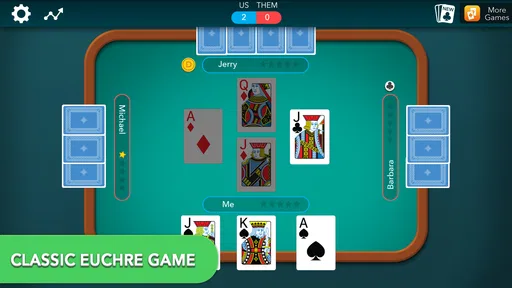
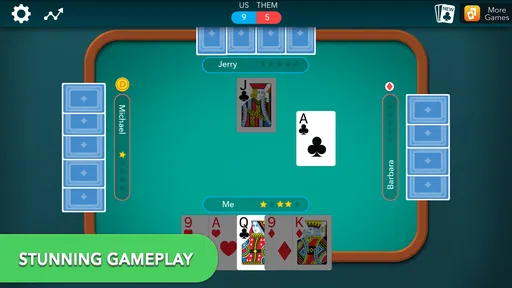
A Euchre hand moves quickly, but the important decisions are concentrated. The hand is small, so every card carries more weight than it would in a longer game such as standard solitaire or a broad multiplayer card collection. Choosing trump, deciding whether to support a partner, and remembering which high cards have appeared all affect the next trick.
Worth Reading Before You Choose

EA SPORTS FC Mobile 26 Is a Bigger Football Game, but It Takes Time

Flipboard Shows What News Apps Must Do Beyond the Feed

Switching to Android Auto Means Rethinking Your Driving Routine

Google Calendar Makes a Crowded Week Easier to Manage

Ludo King Makes the Most of the Minutes Between Plans

Baby Panda World Brings Quick Play to Modern Phones, but Its Game Library Feels Busy
I like that this structure creates tension without requiring a complicated interface. The game is approachable for someone who knows the basic rules, yet it does not become completely mindless after the first few rounds. A weak lead can expose a strong card too early, while an apparently safe play can leave a partner without the support needed to take control.
The offline option is particularly useful for learning the practical side of the rules. A newcomer may understand what trump means but still struggle with the difference between having a strong hand and having a hand that can actually deliver enough tricks. Replaying hands against computer opponents helps make that distinction clearer. It is not the same as receiving a lesson from an experienced player, but repeated hands reveal patterns that written rules often leave abstract.
One tip I found useful is to treat offline rounds as experiments rather than as tests of pride. Try passing on a marginal hand, then notice how often the opposing side controls the first trick. Try leading a short suit when you expect your partner to have strength elsewhere. The value is not only in winning; it is in seeing how the table responds to a choice.
Using offline games as a practice routine
A practical routine is to play a small block of hands with one specific goal. For example, concentrate on remembering the trump cards that have already appeared instead of trying to calculate every card in the deck. In another session, focus on leading from a suit where you have limited cards. This makes the offline mode more useful than simply tapping through random rounds.
Another non-obvious benefit is that offline play lowers the pressure around mistakes. In an online match, a questionable call can feel costly because another person is waiting on the result. Against computer opponents, I can pause mentally, review the cards, and ask whether the problem was the bid, the lead, or the failure to anticipate the partner’s likely hand. That separation helps build a better habit of analysis.
There is also a trade-off. Practice against computer players cannot fully reproduce the uncertainty, communication limits, and unexpected choices of human opponents. A strategy that works comfortably against predictable play may need adjustment online. I would therefore use offline games to understand the mechanics and sharpen basic judgement, then use online matches when I want a more demanding social test.
What a normal session looks like
When I open the game for a short session, I do not need to prepare a deck, find a table, or wait for friends to be available. I can move directly into the card game and let the compact hand structure create the momentum. This is where the app feels strongest: it makes a traditional game available in a form that fits small gaps in the day.
Imagine having fifteen minutes before a train arrives. A long role-playing game would be a poor choice because it may require a story checkpoint or extended concentration. A solitaire app would be easier, but it would not offer the same partnership decisions. Here, a few Euchre hands can provide a more active mental break, with enough strategy to keep the session engaging without demanding a large time commitment.
For a family member or friend who already knows Euchre, online play can make the app feel closer to a shared card table. The appeal depends on finding a suitable opponent or partner, so I would not treat it as a guaranteed replacement for meeting in person. Still, having the digital option is useful when distance or scheduling makes a physical game inconvenient.
New players should spend time getting comfortable with the flow before worrying about advanced tactics. Euchre rewards knowing when not to force a hand. If the cards do not support a confident call, passing can be the correct decision even when it feels less exciting. The small number of cards makes every error visible, which is frustrating at first but helpful for learning.
Small decisions that improve the experience
I recommend paying attention to the order in which tricks are played, not just to whether a hand is won. If a strong card is used too early, the remaining tricks may become harder to control. If a player keeps a useful trump card until the end, that card may protect a crucial trick or rescue a weak-looking hand. Thinking in terms of future control makes the game more interesting than simply choosing the highest available card.
Partnership play adds another layer. You cannot see your teammate’s cards, so their lead and responses become clues. A cautious player may prefer to protect a certain suit, while an aggressive player may be trying to draw out opposing trump. I found that the app is most rewarding when I stop treating each trick as an isolated event and instead read the hand as a sequence.
One useful habit is to remember what has already been spent before making a late-hand decision. Because Euchre uses a compact set of cards, memory has a meaningful payoff. You do not have to track everything perfectly; simply noting whether the strongest trump has appeared can change whether a lead is sensible. This is one reason the game feels more strategic than its simple interface might suggest.
Where the app fits among card-game alternatives
Compared with a standard solitaire game, this app offers more interaction and more responsibility for reading the table. Solitaire is often better when I want a quiet puzzle with no partnership element. Euchre Classic Card Game is the better choice when I want a game shaped by bidding, trick order, and the uncertainty of hidden cards.
Compared with a broad card-game collection, its narrow focus is both a strength and a limitation. I appreciate not having to navigate through poker, blackjack, freecell, and several variations before reaching Euchre. On the other hand, someone who wants many different card games in one installation may find the dedicated format restrictive.
It also differs from playing with a physical deck. A real table offers conversation, visible gestures, and the pleasure of handling cards. The app cannot reproduce that atmosphere. What it does provide is convenience, automatic dealing, and a quick way to practise when a physical group is unavailable. I see it as a companion to traditional play rather than a complete substitute for it.
Online play creates another comparison. A human match can be more unpredictable and emotionally engaging, while offline play is more dependable for practice. If your priority is competition against unfamiliar players, the online side will matter most. If your priority is learning the rhythm of the game or filling a short break, offline play may be the more useful feature.
Limitations worth considering before installing
The focused design means the game will not satisfy everyone. Players who need constant novelty, elaborate visuals, or a large progression system may find the experience too restrained. Its strength comes from repeating the same rules with different hands, so enjoyment depends on whether you like improving within a stable framework.
In-app purchases range from $4.99 to $29.99 per item, so I would review any purchase prompts carefully before spending money. The game itself is free, which makes it easy to try, but free access does not mean every optional element is without cost. For someone looking only for occasional offline hands, the basic experience may be enough; for others, the available purchases could become part of the decision.
The age rating of Everyone makes it suitable for a broad audience, but suitability is not the same as universal appeal. Younger players who do not know trick-taking games may need an explanation from an adult or experienced player. The app can provide a place to practise, yet learning the social conventions of partnership Euchre is easier when someone explains why a particular play helped or hurt the team.
Device compatibility is also something to keep in mind. The current version is 1.6.1 and requires Android 7.0 or later. That covers many devices, but anyone using an older phone or tablet should check compatibility before planning around it. On supported hardware, the modest card-game format should be a comfortable fit for casual use.
Who gets the most from this game
The best match is someone who already enjoys Euchre or wants a focused way to learn it. I would especially recommend it to players who alternate between social games and solo practice. The online and offline choice lets the app serve both purposes without forcing every session into the same format.
It is also a good fit for people who enjoy mental games in short bursts. The decisions are meaningful, but the game does not require the long setup associated with a physical gathering. If you like remembering played cards, judging risk, and trying to infer a partner’s intentions, you will probably find more depth here than the simple card-table presentation suggests.
On the other hand, I would skip it if your main goal is a huge variety of card modes, a story campaign, or a highly visual multiplayer spectacle. A general card collection would be more suitable for variety, and a physical deck would be better for conversation and face-to-face teamwork. This app makes the most sense when Euchre itself is the reason you want to play.
The game has built a noticeable audience, with an average rating of 4.1 from around 8,500 ratings and more than 500,000 installs. Those figures suggest that the dedicated format has found plenty of players, but they should not replace your own judgement about the game’s narrow scope. Popularity is reassuring; it does not turn a specialised card game into a universal recommendation.
FIOGONIA LIMITED has kept the product centered on the classic rules and the practical choice between connected and disconnected play. That simplicity is exactly why I would suggest trying it before paying for anything. Give the offline mode enough time to see whether the decision-making clicks, then decide whether online play adds the kind of challenge or social contact you want.
My recommendation after playing
I came away seeing this as a dependable Euchre companion rather than an all-purpose card-game app. Its strongest quality is not spectacle but access: I can practise alone, play online when I want a more social match, and return to the same familiar rules without a long learning curve.
The most rewarding way to use it is deliberately. Treat offline hands as a training table, focus on one decision at a time, and use online games to test whether those habits hold up against less predictable opponents. That approach reveals the game’s real depth and prevents it from becoming a sequence of automatic taps.
If you want a focused Euchre game that works for both quick practice and connected play, I think it is worth installing. Just keep your expectations realistic: it is not a large card collection or a replacement for the atmosphere of a real table. For the right player, though, its narrow purpose is an advantage, giving a classic partnership game room to stay challenging without becoming complicated.
Pros
- Clear rules and tutorials help beginners learn Euchre quickly.
- Smooth controls make bidding
- trump selection
- and card play easy.
- Offline mode lets you play without Wi-Fi or mobile data.
- Short matches are ideal for quick gaming sessions.
- Adjustable difficulty provides a challenge for different skill levels.
Cons
- Computer opponents can sometimes make predictable plays.
- Limited customization may reduce long-term replay variety.
- Ads may interrupt the experience in the free version.
- Requires understanding Euchre’s regional rules and terminology.
- No real-time multiplayer can disappoint players seeking live competition.
FAQs for Euchre Classic Card Game
What is Euchre Classic Card Game?
Euchre Classic Card Game is a digital version of the traditional trick-taking card game, usually played by four players in two teams. The app recreates the familiar bidding, trump selection, and trick-winning mechanics in a mobile format. It is designed for players who already know Euchre as well as beginners who want to learn through practice.
Can beginners learn how to play Euchre in the app?
Yes, the game is generally suitable for newcomers because mobile Euchre versions commonly include instructions, explanations of the rules, and practice matches. Even if you have never played before, you can learn the value of the cards, understand how trump works, and become familiar with calling the right suit. However, you may need a few rounds to understand team strategy.
Can I play Euchre Classic Card Game offline?
Offline availability can depend on the specific version and platform, so it is worth checking the app’s store description before downloading. If an offline mode is included, it normally allows you to play against computer-controlled opponents without an internet connection. Online features, advertisements, updates, leaderboards, or multiplayer matchmaking may still require Wi-Fi or mobile data.
Does Euchre Classic Card Game support multiplayer?
Many Euchre apps offer multiplayer options, but the available modes can vary between releases. Some versions let you play against artificial-intelligence opponents, while others may include online matches or local play with friends. Before installing, check whether multiplayer is real-time, turn-based, private-room based, or limited to a particular platform, since these details can significantly affect the experience.
Is Euchre Classic Card Game free to download?
Euchre Classic Card Game may be free to install, although free versions can include advertising, optional purchases, or limitations on certain features. The exact pricing model depends on whether you download it for Android or iOS and on the current store listing. Review the permissions, in-app purchase information, and subscription details before downloading, especially if children may use the device.


